Being Human Just Got a Lot More Complicated
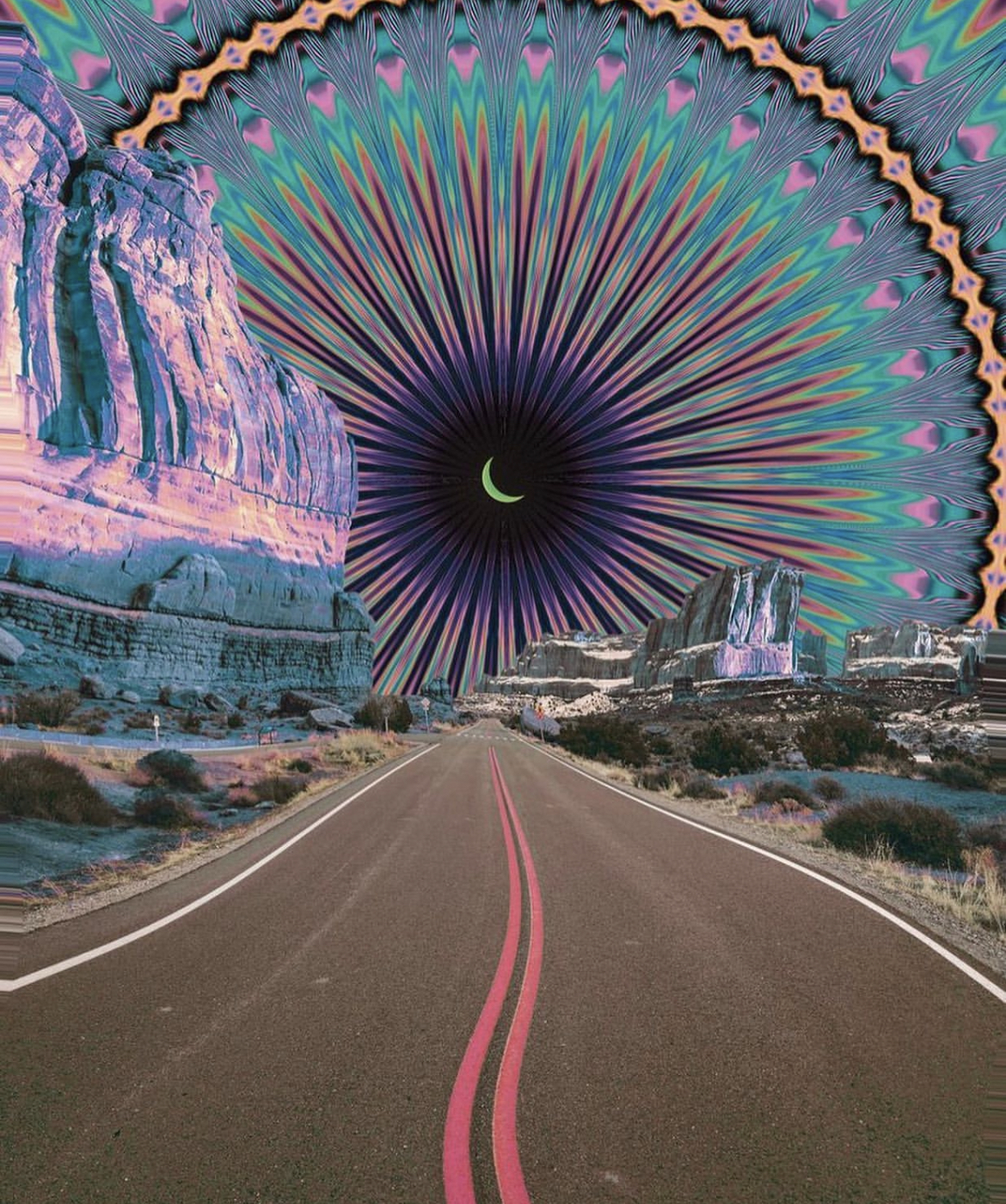
Being human right now is a wild ride. Buckle up, because it's not slowing down anytime soon.
Remember When Life Was Simple?
Back in the 80s and 90s, life was simple and sweet. People were limited in how they could get ahold of you. No 12 messaging apps, no bluetooth, no fifteen tabs open in your brain at once. Just you, a phone with a long curly cord stretched clear across the kitchen, and the agony of a busy signal when you were dying to reach someone.
You called a house, not a person. You waited. You wondered. And somehow, life went on just fine.
The Cosmic Timestamp
Things are changing mighty fast, so quickly it's hard to keep up. And the sky agrees.
Uranus, the planet of sudden change, rebellion, and full system reboots, gave us a preview in Gemini from July 7 to November 7, 2025. That was just the trailer. The real feature started April 25, 2026, when Uranus moved into Gemini for good, and it's here to stay until 2033.
Translate that out of astrology (nerd) speak: the planet of disruption just settled into the sign that rules communication, technology, information, and the human mind, for the next seven years. We're only a few months in, and it already feels like the ground beneath the way we communicate is shifting.
Connected to Everything, Except the Wild in Us
Whether you follow astrology or not, you can feel and see the changes happening around us.
Our attention is fractured. Our minds are crowded. Our phones have become extensions of our bodies like miniature cyborg we are constantly connected. For better or worse we live in an ever evolving technological world.
Over time, that disconnection doesn't just make us distracted. It changes the way we relate to ourselves. We stop trusting our own perceptions. We look outside ourselves before looking within. We mistake information for wisdom, stimulation for aliveness, and certainty for truth. Our attention becomes fragmented, and eventually, so does our sense of self.
Not Lost. Waiting to Be Found.
We didn't lose that part of ourselves.
We simply became so consumed by the noise around us that we forgot how to hear what was already within us.
The good news? What has been forgotten can be remembered. The capacity to trust yourself, to feel deeply, to think clearly, and to stay rooted in your own experience hasn't disappeared. It simply needs the space to be heard again.
The One Thing I Know For Sure
One thing I can say with real certainty: protecting our nervous system is about to become as essential as sleeping at night. Not a luxury. A daily, non-negotiable act of self-preservation.
In a world full of noise and constant demands for our attention, finding a way to disconnect from the noise every single day is no longer optional. It's survival.
What Machines Can't Do
AI will almost certainly become better than us at processing information.
It can't fall in love.
It can't sit beside someone who's grieving.
It can't feel awe standing beneath a sky full of stars.
It can't know what it feels like to trust your own intuition after years of doubting it.
Those things are profoundly, stubbornly human.
My hope isn't that we resist technology. It's that we become fiercely devoted to protecting the conditions that allow us to remain fully human.